Microsoft integrates ChatGPT into Windows 11: farewell to Cortana for good
The arrival of generative artificial intelligence at the core of the operating system marks a definitive paradigm shift. We analyze how replacing Cortana with technologies derived from ChatGPT is transforming workflows, desktop management, and human-machine interaction.

In our daily operations at GoBooksy, where we manage digital infrastructures and complex workflows, we have witnessed a shift that goes far beyond a simple software update. The decommissioning of Cortana and the simultaneous deep integration of ChatGPT-based technologies within Windows 11 represent not just a changing of the guard in features, but a total redefinition of the digital assistant concept. For years, we engaged with reactive interfaces programmed to execute specific commands; today, we face systems capable of reasoning, synthesis, and creation, radically altering how we interact with our workstations.
The end of Cortana was inevitable and, looking at real-world usage data, almost necessary. The traditional voice assistant suffered from an insurmountable structural limit: it could only do what it was explicitly programmed to do. When we asked Cortana to set a reminder or open an application, the interaction was binary and context-free. If the request derailed from the pre-defined tracks, the system failed, forcing the user to resort to a browser. The integration of Large Language Models, which in Windows 11 takes shape through Copilot, has swept away this rigidity. In our operational tests, we have noted how the smart sidebar does not merely answer questions but acts as an interpretive layer over the operating system. We are no longer asking the computer to perform a task; we are collaborating with it to process information.
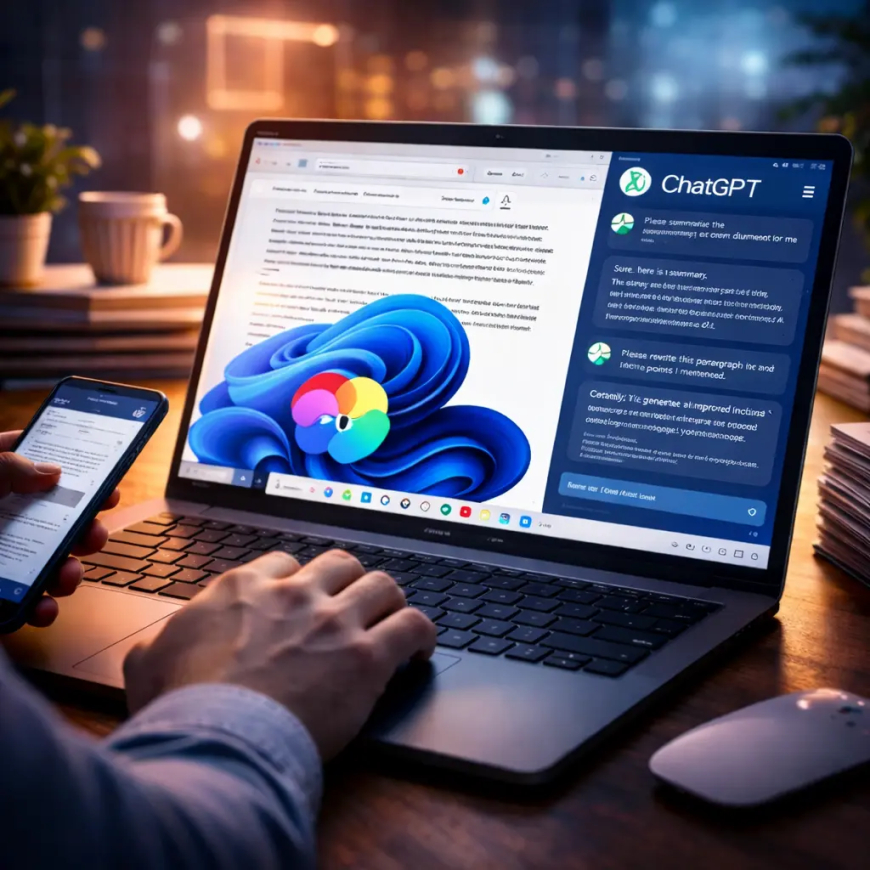
The substantial difference we encounter in the GoBooksy ecosystem lies in context management capabilities. While Cortana lived in a sort of isolation, activating only upon direct call, the generative artificial intelligence integrated into Windows 11 has the ability to read what is happening on the screen. This drastically changes productivity: we no longer have to copy text, open a browser, paste it, and ask for a summary. We can query the assistant directly regarding the open document, asking it to rewrite, analyze, or change the tone, without ever leaving the active window. This fluidity eliminates operational friction that, accumulated over a workday, represented a considerable loss of time.
A critical aspect often underestimated concerns how this technology controls the system itself. Early versions of voice assistants were clumsy at handling PC settings. With the current integration, user intent is decoded with surprising precision. Instead of navigating through labyrinthine menus to activate dark mode or configure a focus session, one simply expresses the desire in natural language. The AI translates a colloquial phrase into a precise system command. This democratizes advanced computer usage, making configurations accessible that many users ignored simply because they were difficult to find.
However, this evolution brings new challenges that we face daily in security and privacy management. Cortana operated within a limited data perimeter; the current integration requires a constant flow of information to the cloud to process complex responses generated by GPT models. Although Microsoft has implemented robust protocols, for us as industry operators, it is fundamental to understand that every interaction with the assistant is a data transaction. The convenience of having an intelligence capable of summarizing a meeting or generating email drafts entails the need for greater awareness of what information we are sharing with the remote processing infrastructure.
The farewell to Cortana symbolically marks the end of the era of "dumb" voice commands and the beginning of the era of cognitive assistance. We no longer seek canned answers, but unique elaborations. The choice to integrate this power directly into the taskbar, making it omnipresent and callable with a dedicated key on new keyboards, demonstrates that AI is no longer an accessory feature but the new engine of user experience. At GoBooksy, we observe how this transition is rendering obsolete old workflows based on procedural memorization, favoring a more intuitive and creative approach to problem-solving.
We are facing a historical moment where the computer ceases to be just a passive tool to become an active partner. The disappearance of Cortana’s circular icon to make way for the colorful Copilot logo is visual testimony that technology has stopped trying to imitate a human secretary to become something completely different: an amplifier of the user's intellectual capabilities, integrated into the very fabric of the digital everyday.